Why small homes feel messy faster
A one-bedroom flat has fewer surfaces, so the same post, shoes and mugs that would disappear in a larger house become visible immediately. That's not a sign you own "too much" in some moral sense. It simply means the margin for error is smaller, and the reset matters more.
The useful measure isn't how few things you own, but how long it takes to return your home to a usable state. If your evening reset takes forty minutes, you'll skip it. If it takes ten, it becomes as automatic as brushing your teeth.
Landing zones: put homes where things land
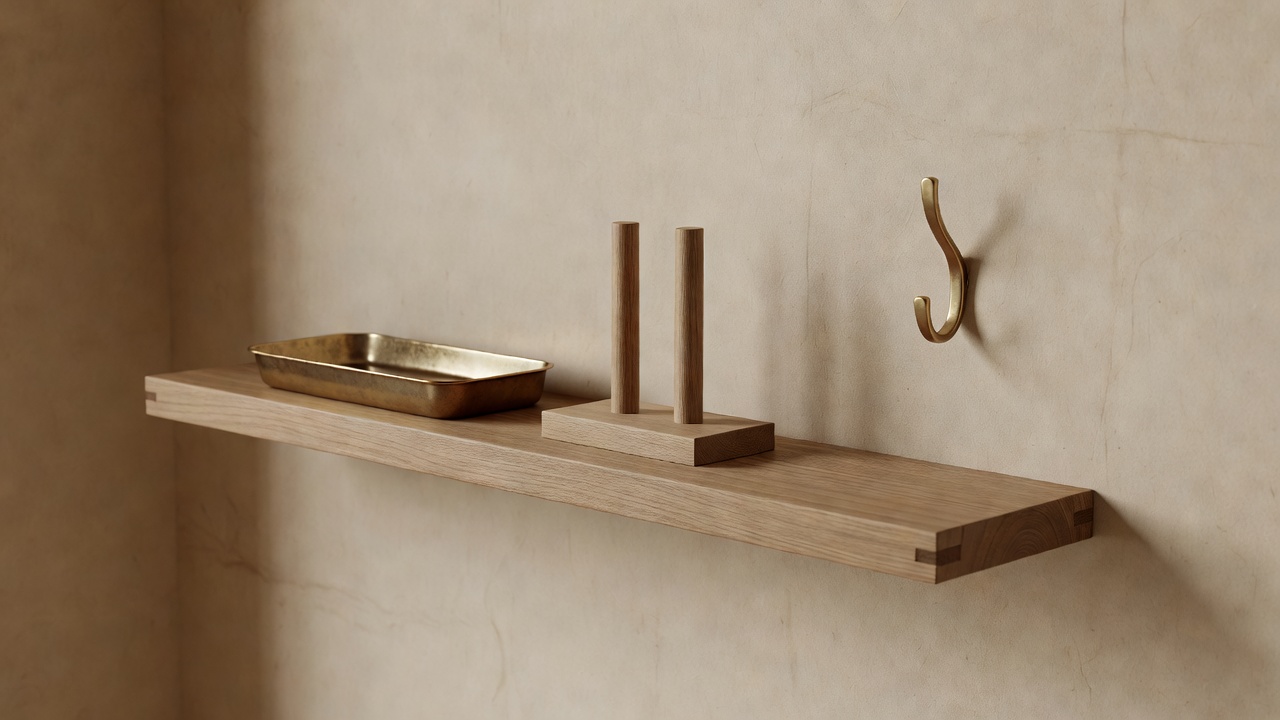
Watch where items naturally end up. If keys always land on the kitchen counter, that's where their home should be, or as close as possible. Fighting your own habits rarely works. A small tray, a hook or a basket at each landing point turns a pile into a system.
Common landing zones in compact homes include the entry (keys, bags, post), the sofa arm (remote, glasses, chargers) and the bedside (book, phone, water). Give each one a defined container, and the reset becomes "empty the overflow" rather than "find a place for everything".
Approaches worth borrowing, selectively
You don't need to adopt any single philosophy wholesale. Different methods suit different moments:
- Sorting by category, popularised by Marie Kondo in The Life-Changing Magic of Tidying Up, means gathering all clothes or all books at once so you see the true quantity. Useful before a move.
- Gradual paring down, described in Fumio Sasaki's Goodbye, Things, shows how reducing possessions can lower daily maintenance. Take the parts that help; skip the extremes.
- Swedish death cleaning, from Margareta Magnusson's The Gentle Art of Swedish Death Cleaning, is a gentle prompt to sort things so others won't have to. Despite the name, it's practical and calm.
- One in, one out keeps volumes steady once you've found a comfortable level. It works especially well for clothes, mugs and books.
Evening reset (10 minutes)
0 of 6 doneWeekly reset (30 minutes)
0 of 6 doneYour ticks are saved only in this browser so you can pick up where you left off.
Letting things go without guilt
Keep a donation bag somewhere accessible, so releasing an item is a two-second decision rather than a project. Charity shops, local Freecycle groups and community swap events give useful things a second life. For sentimental objects, it's fine to keep a small, chosen selection or take a photo and let the bulk go. It's equally fine to keep them all if you have room. There's no score.
Trade-offs to expect
Fewer items generally means faster resets, but going too far can create its own friction: buying the same tool again, or not having a spare towel when guests arrive. The Minimalists, Joshua Fields Millburn and Ryan Nicodemus, frame possessions in terms of whether they add value. That's a helpful lens, as long as "value" includes comfort, hobbies and the occasional useful spare.
Start with the reset, not the purge. Once the routine is in place, you'll see naturally which items keep getting in the way.